.png)
Commercial LED Lighting Retrofit Cost in Ontario: 2026 Guide


Quick Answer
Commercial LED lighting retrofit cost in Ontario depends on the fixture count, existing lighting type, ceiling height, access, controls, operating hours, labour complexity, and rebate eligibility.
There is no honest one size fits all price. An office with fluorescent panels will price very differently from a warehouse with high bays or an industrial building with exterior lights and production areas.
A proper estimate should show:
Upfront project cost
Expected energy savings
Maintenance savings
Rebate or discount potential
Estimated payback period
Use Luma Energy’s lighting retrofit savings calculator to compare your current lighting cost with possible LED upgrade savings before requesting a quote.
Introduction
If you are planning a commercial LED lighting retrofit in Ontario, the real question is not just “How much will the fixtures cost?”
The better question is:
What will the project cost, how much will it save, and how long will it take to pay back?
Lighting retrofit cost changes by building type, fixture condition, operating hours, installation access, and available rebates. That is why Luma Energy reviews the actual site before recommending LED tubes, retrofit kits, new fixtures, high bays, panels, potlights, wall packs, or controls.
What Affects the Cost of a Commercial LED Lighting Retrofit?
A lighting retrofit is not priced by fixture count alone. Fixture count matters, but it is only one part of the project. A proper audit looks at the existing lighting system, the building layout, the installation environment, and the business case.
Main Cost Drivers
Cost factor | Why it matters | Example |
Number of fixtures | More fixtures usually means more materials, labour, disposal, and coordination | A small office is simpler than a full office floor with many troffers |
Existing fixture type | Fluorescent, HID, metal halide, halogen, and older LED fixtures may need different upgrade methods | Replacing T8 tubes is different from replacing HID high bays |
New LED option | LED tubes, retrofit kits, panels, troffers, high bays, wall packs, and downlights all have different labour needs | A tube replacement may be simpler than installing new fixtures |
Ceiling height | Higher ceilings often require lifts and extra safety planning | Warehouse high bays usually need more access planning than office panels |
Access requirements | Racking, machinery, vehicles, tenants, or production areas can slow down installation | A warehouse aisle may need work scheduled outside operating hours |
Wiring condition | Older wiring, failing ballasts, damaged sockets, or unsafe conditions can increase complexity | A ballast bypass may reveal fixture or wiring issues |
Controls and sensors | Occupancy sensors, daylight sensors, dimming, and networked controls can improve savings but add setup work | Offices and warehouses often need different control strategies |
Operating hours | The more hours lights run, the stronger the savings case usually becomes | A facility running lights all day often has better payback potential |
Installation timing | After hours, weekend, or phased work can affect labour planning | Retail and production facilities may need work around business operations |
Rebate eligibility | Eligible products may receive upfront discounts, but the rules depend on the product and program | Some products may qualify through participating distributors |
Labour complexity | Fixture location, mounting method, ceiling type, and site restrictions all matter | A clean drop ceiling is usually easier than exterior wall mounted fixtures |
Disposal | Old lamps, ballasts, and fixtures may need proper removal | Fluorescent lamps and old ballasts should be handled properly |
Why Rough Pricing Can Be Misleading
A rough “price per fixture” can miss important parts of the job.
It may not include:
Lift access
Controls
Old wiring issues
Ballast condition
Disposal
After hours labour
Rebate eligibility
Light level requirements
That is why a proper lighting audit is important. The audit should answer four questions:
1. What do you currently have?
This includes fixture type, wattage, lamp type, ballast condition, mounting height, and layout.
2. What should replace it?
The right option may be LED tubes, retrofit kits, flat panels, high bays, wall packs, or new fixtures.
3. How much will it save?
Savings depend on wattage reduction, operating hours, hydro cost, controls, and maintenance reduction.
4. Is the project worth doing?
A good estimate should show cost, savings, rebate potential, and payback period.
Best Starting Point by Building Type
If your building is mainly... | Start here |
Office space | |
Retail, clinic, showroom, or mixed commercial space | |
Warehouse, shop, gym, or high ceiling space | |
Manufacturing or production facility |
Commercial LED Retrofit Cost by Building Type
Commercial LED retrofit cost changes by building type. Each space has different lighting needs, access conditions, operating hours, and upgrade priorities.
That is why Luma Energy does not use random generic pricing. Your project estimate should be based on your actual fixture count, existing lighting, access conditions, operating hours, and rebate path.
Cost Drivers by Building Type
Building type | Common existing lighting | Common LED upgrade | Main cost drivers | Best next step |
Office | Fluorescent tubes, troffers, panels | LED panels, LED troffers, T8 LED tubes | Fixture count, ceiling layout, controls, tenant schedule, light comfort | Office lighting audit |
Retail | Track lighting, potlights, panels, tubes | LED downlights, panels, accent lighting | Appearance, colour quality, layout, after hours installation | Commercial lighting review |
Warehouse | HID, metal halide, fluorescent high bays, older LED high bays | UFO or linear LED high bays | Ceiling height, lifts, fixture spacing, racking, operating hours | High bay lighting audit |
Industrial facility | High bays, task lighting, exterior lighting | High output LEDs, task lights, controls | Production schedule, safety, access, light levels, maintenance reduction | Industrial lighting audit |
Parking or exterior | Wall packs, pole lights, floodlights | LED wall packs, area lights, floodlights, controls | Mounting height, coverage, safety needs, photocells, timers | Outdoor lighting review |
Multi use commercial building | Office lights, common area lights, exterior lights, service area lights | Mix of LED panels, tubes, wall packs, potlights, and controls | Different fixture types, phased installation, tenant access, rebate path | Full commercial lighting assessment |
Example: Office Building

Office retrofits often involve fluorescent tubes, troffers, or older panels.
Common upgrade options include:
LED flat panels
LED troffers
T8 LED tubes
Occupancy sensors
Daylight controls where useful
The main cost drivers are usually fixture count, ceiling layout, tenant schedule, and whether controls are included.
For example, a basic office retrofit may be straightforward if the ceiling grid is clean and fixtures are easy to access.
It becomes more complex if the work has to happen after hours, in occupied spaces, or across multiple tenants.
Example: Warehouse
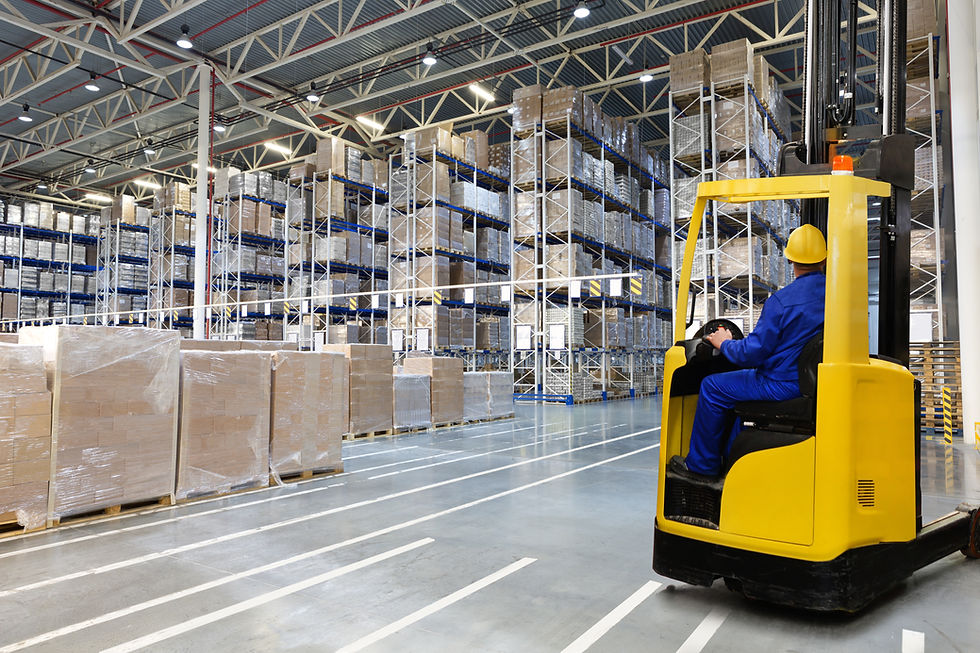
Warehouse retrofits are usually more access driven.
Common existing lighting includes:
Metal halide high bays
HID fixtures
Fluorescent high bays
Older LED high bays
Common upgrades include:
UFO LED high bays
Linear LED high bays
Aisle lighting
Occupancy sensors
Daylight controls where appropriate
The main cost drivers are ceiling height, lift access, fixture spacing, racking layout, and operating hours.
A warehouse with clear open access is easier to upgrade than one with active racking, equipment, or production zones under the fixtures.
Example: Industrial Facility

Industrial lighting projects need more planning.
The lighting upgrade may include:
High bays
Task lighting
Exterior lights
Emergency or safety related lighting
Controls
Phased installation
The main cost drivers are production schedule, safety requirements, access, light levels, and the need to avoid downtime.
In these buildings, the cheapest fixture is not always the right choice.
The lighting has to support visibility, safety, productivity, and maintenance reduction.
Common Mistakes Businesses Make
Mistake | Why it can cause problems |
Choosing only by fixture price | It ignores labour, access, performance, maintenance, and payback |
Assuming rebates apply automatically | Eligibility depends on the product, program, distributor, and project type |
Replacing lamps without checking sockets or ballasts | Old components can reduce reliability |
Ignoring controls | Sensors and controls may improve savings in the right spaces |
Not checking light levels | Lower wattage does not automatically mean better lighting |
Waiting until lights fail | Emergency replacement usually gives you fewer options |
Does Replacing Lamps Cost Less Than Replacing Fixtures?
Sometimes, yes.
Replacing lamps can cost less upfront than replacing full fixtures.
But that does not always make it the best long term option.
The right choice depends on the existing fixture condition, light quality needs, rebate eligibility, labour, maintenance, and how long you plan to use the space.
Main LED Upgrade Options
Option | What it means | When it can make sense | What to watch for |
LED tube replacement | Existing fluorescent tubes are replaced with LED tubes | Offices, storage rooms, back rooms, and simple layouts | Ballast condition, socket condition, compatibility, long term reliability |
LED retrofit kit | Existing fixture housing stays, but internal components are upgraded | When fixture housings are still in good shape | Labour, compatibility, appearance, performance |
New LED fixture | The old fixture is removed and replaced with a new LED fixture | When old fixtures are damaged, outdated, inefficient, or poor quality | Higher upfront cost, but often better long term performance |
LED flat panel | Common office ceiling fixture replacement | Offices, clinics, classrooms, commercial spaces | Layout, glare, colour temperature, dimming compatibility |
LED high bay | High output fixture for warehouses, gyms, shops, and industrial spaces | High ceilings and large open areas | Mounting height, beam angle, spacing, lift access |
LED potlight or downlight | Recessed or surface lighting for commercial interiors | Retail, offices, corridors, lobbies, hospitality spaces | Appearance, beam spread, ceiling condition, dimming |
Lamp Replacement
LED tube replacement is often the simplest looking option.
It can work well when:
Existing fixtures are in good condition
The layout already works
Light levels are acceptable
The goal is a simple energy reduction
The building has many similar fluorescent fixtures
But it is not always the best choice.
Older fixtures may have poor sockets, yellowed lenses, failing ballasts, damaged housings, or poor light distribution. In those cases, installing new fixtures may be a smarter long term decision.
New Fixture Replacement
New LED fixtures usually cost more upfront than simple lamp replacement.
But they can also offer:
Better light output
Better efficiency
Cleaner appearance
Lower maintenance
Better dimming compatibility
Better control options
More consistent light quality
This is especially important in customer facing spaces, offices, warehouses, industrial facilities, and buildings where lighting affects safety or productivity.
Simple Decision Table
If your priority is... | Usually consider... |
Lowest upfront cost | LED tube replacement |
Better appearance | New LED panels, troffers, potlights, or downlights |
Better warehouse visibility | New LED high bays |
Fewer maintenance issues | New LED fixtures or properly designed retrofit kits |
Better control options | New fixtures with compatible sensors or controls |
Better long term performance | New fixtures, especially when existing fixtures are old or damaged |
The Key Point
The cheapest option today is not always the cheapest option over the life of the building.
A lower upfront cost can become expensive if the lights fail early, produce poor light, require more maintenance, or do not support the way the space is used.
For a deeper comparison, read Luma Energy’s guide on retrofit vs new LED fixture.
How Rebates Can Reduce Upfront Cost
Ontario lighting rebates can make a commercial LED retrofit more attractive.
But rebates should not be treated as automatic.
Eligibility depends on:
The lighting product
The program rules
The distributor
The building type
Whether the project is a retrofit
Whether the product is installed in Ontario
Whether the product meets the required efficiency listing
For many standard commercial lighting upgrades, the main rebate path is now Save on Energy Instant Discounts.
How Save on Energy Instant Discounts Work
Save on Energy Instant Discounts are point of sale discounts.
That means the discount is usually applied when eligible lighting products are purchased through a participating distributor.
This is different from the old process where many lighting measures went through the Retrofit Program.
Save on Energy states that most lighting measures moved from the Retrofit Program to Instant Discounts after December 17, 2023.
What Lighting Products May Be Eligible?
Eligible products may include general purpose and specialty lighting products that meet Save on Energy requirements.
According to Save on Energy program requirements, eligible measures include general purpose and specialty ENERGY STAR or DesignLights Consortium qualified lighting products.
Common commercial examples may include:
LED tubes
LED panels
LED troffers
LED high bays
LED downlights
LED wall packs
LED lighting controls, where eligible
The exact product must be checked before purchase.
Do not assume a fixture qualifies just because it is LED.
Important Rule for Existing Buildings
For lighting, Save on Energy says Instant Discounts are only available for retrofits in existing buildings where less efficient lighting previously existed.
That matters for Ontario businesses.
If the project is new construction, a new facility, or a new addition, it may not qualify under the lighting Instant Discounts rules. Save on Energy’s 2026 program requirements also state that incented lighting products must not be installed in new construction projects.
What About the Retrofit Program?
Some lighting related projects may still fit the Retrofit Program.
Save on Energy lists network lighting controls under its Retrofit Program prescriptive stream.
It also lists horticulture lighting, horticultural advanced lighting controls, and ventilation equipment under greenhouse incentives. This is why rebate planning should happen early.
A business may have one of these situations:
Project type | Likely rebate path to check |
Standard LED lamps or fixtures | Save on Energy Instant Discounts |
LED high bays | Save on Energy Instant Discounts, if product and project qualify |
LED panels or troffers | Save on Energy Instant Discounts, if product and project qualify |
Networked lighting controls | Retrofit Program may apply |
Horticultural lighting | Retrofit Program greenhouse incentives may apply |
Refrigerated display case LEDs | Program path should be checked before quoting |
New construction lighting | Instant Discounts for lighting usually do not apply |
Rebate Planning Tips for Ontario Businesses
Confirm Before You Buy
Rebate eligibility should be checked before ordering products.
Once fixtures are purchased or installed, your options may be limited.
Use Participating Distributors
Instant Discounts are delivered through participating distributors.
If the product is not purchased through the right path, the discount may not be applied.
Check the Invoice
Save on Energy program requirements say participating distributors must display the pass through incentive as a line item on the purchaser sales invoice, using “Save on Energy Instant Discounts.”
For contractors, the incentive amount should also be documented to the end customer where applicable. Learn more by reading the SOE's program requirements.
Do Not Double Dip
Save on Energy notes that Retrofit Program participants must not also accept Instant Discounts for the same lighting measures, to avoid duplication of incentives. More info on Save on Energy
Best Next Step
Before choosing fixtures, estimate your possible rebate path.
Use Luma Energy’s lighting rebate estimator to get a better starting point.
For a broader overview, read our guide to Save on Energy lighting rebates.
What Is the Payback Period for a Commercial LED Lighting Upgrade?
The payback period tells you how long it may take for the lighting upgrade to recover its cost through savings.
For a commercial LED retrofit, payback depends on several factors.
Main Payback Factors
Factor | Why it matters |
Current wattage | Higher existing wattage usually creates more savings potential |
New LED wattage | Lower wattage can reduce electricity use |
Operating hours | More hours usually means faster savings |
Hydro rate | Higher electricity cost increases the value of each kWh saved |
Maintenance savings | Fewer lamp and ballast replacements can improve the business case |
Rebate or discount amount | Incentives can reduce upfront cost |
Installation cost | Labour, lifts, access, and controls affect total project cost |
Controls | Sensors and dimming can reduce runtime in the right spaces |
Simple Payback Formula
You do not need a complicated formula to understand the concept.
The basic idea is:
Project cost after rebates divided by estimated annual savings.
For example:
Item | What it means |
Project cost after rebates | What the business pays after eligible discounts or incentives |
Estimated annual savings | Electricity savings plus maintenance savings |
Payback period | How many years it may take to recover the project cost |
The more hours your lights run, the faster the payback usually becomes.
Why Operating Hours Matter So Much
A fixture that runs two hours per day will save less than the same fixture running twelve hours per day.
That is why lighting retrofits often make stronger financial sense in:
Warehouses
Manufacturing facilities
Offices with long operating hours
Retail stores
Gyms
Parking garages
Exterior security lighting
Common areas in commercial buildings
Example: Same Fixture, Different Runtime
Space | Runtime pattern | Payback impact |
Storage room | Used occasionally | Lower savings potential |
Office floor | Used most business days | Moderate savings potential |
Warehouse | Runs long hours | Stronger savings potential |
Exterior security lighting | Runs overnight | Often strong savings potential |
Production facility | Runs extended shifts | Often strong savings potential |
Do Controls Improve Payback?
Sometimes, yes. Controls can help reduce wasted runtime.
Common options include:
Occupancy sensors
Vacancy sensors
Daylight sensors
Dimming controls
Networked lighting controls
Timers or photocells for exterior lighting
Controls are most useful where lights are often left on when not needed.
Examples include:
Storage rooms
Washrooms
Private offices
Boardrooms
Warehouses with low traffic zones
Parking areas
Common areas
Exterior lighting
But controls should be designed properly.
Poorly placed sensors can frustrate staff, reduce comfort, or create dark zones.
What to Calculate Before Approving a Retrofit
Before moving forward, an Ontario business should estimate:
Existing Lighting Cost
This includes current wattage, fixture count, and operating hours.
New Lighting Cost
This includes proposed wattage, new fixture type, and expected runtime.
Rebate Impact
This includes Save on Energy Instant Discounts or any applicable Retrofit Program path.
Maintenance Reduction
This includes avoided lamp, ballast, lift, and service costs where applicable.
Payback Period
This shows whether the project makes financial sense.
Use Luma Energy’s lighting operating cost calculator and lighting retrofit savings calculator to compare current lighting costs against LED upgrade options.
When Is a Lighting Retrofit Usually Worth It?
A lighting retrofit is usually worth reviewing when the building has older, inefficient, high maintenance, or high use lighting.
It is not only about energy savings.
The project may also improve:
Visibility
Safety
Staff comfort
Customer experience
Maintenance planning
Building appearance
Operating cost control
Good Candidates for a Commercial LED Retrofit
A retrofit is usually worth investigating if one or more of these apply.
Sign | Why it matters |
Lights run many hours per day | More runtime usually creates stronger savings potential |
Fluorescent fixtures are still in place | Older fluorescent systems can use more energy and require more maintenance |
HID or metal halide fixtures are still in place | These are common retrofit targets in warehouses and industrial buildings |
Maintenance is frequent | Replacing lamps, ballasts, and failed fixtures adds cost and disruption |
Light levels are poor | Poor visibility can affect safety, comfort, and productivity |
Staff complain about lighting | Flicker, glare, dim areas, or harsh colour can affect the work environment |
The building has many similar fixtures | Repeated fixture types can make the project easier to standardize |
Exterior lights run overnight | Long runtime can create a stronger savings case |
A rebate path is available | Incentives can reduce upfront cost |
The owner plans to keep the space | Longer use of the building gives more time to benefit from savings |
Spaces That Often Save More
Some spaces are naturally better candidates because lights run longer or fixtures are harder to maintain.
Space type | Why it may be a strong candidate |
Warehouse | High ceilings, long runtime, high bay fixtures, lift related maintenance |
Industrial facility | Long operating hours, safety needs, production visibility |
Office | Many repeated fixtures, comfort concerns, control opportunities |
Retail | Appearance, operating hours, customer experience |
Gym or recreation facility | High ceilings and long lighting schedules |
Parking area | Overnight runtime and safety needs |
Exterior building lighting | Security, visibility, and long runtime |
Common areas | Lights often stay on for extended periods |
When a Retrofit May Not Be Worth It
Not every lighting project has a strong payback.
A retrofit may be less attractive if:
There are very few fixtures
The lights are rarely used
A recent LED upgrade was already completed
The fixtures are mostly decorative
Energy savings are minimal
The business is leaving the space soon
The project is new construction and does not qualify for lighting Instant Discounts
The existing lighting already performs well
This does not mean you should ignore the lighting.
It means the project should be checked before spending money.
Quick Decision Table
Situation | Likely recommendation |
Old fluorescent office lights | Review LED tubes, panels, troffers, and controls |
Metal halide warehouse high bays | Review LED high bays and fixture spacing |
Exterior wall packs running overnight | Review LED wall packs, photocells, and coverage |
Recently upgraded LED fixtures | Check performance before replacing |
Low use storage area | Controls may matter more than full replacement |
Customer facing retail space | Balance savings with appearance and light quality |
Industrial facility with downtime concerns | Plan a phased installation |
The Best Rule
A lighting retrofit is worth serious consideration when the savings, maintenance reduction, light quality improvement, and rebate potential are strong enough to justify the project.
That is exactly why a proper audit matters.
Luma Energy can review your fixture count, existing wattage, operating hours, upgrade options, rebate path, and payback period before you decide.
For next steps, start with a commercial lighting upgrade, industrial lighting upgrade, or office lighting upgrade review depending on your building type.
Example Retrofit Scenarios
Every commercial LED retrofit should be priced from the actual building.
Still, examples can help Ontario businesses understand what usually changes from one project to another.
Below are three common retrofit scenarios.
Small Office Retrofit
A small office may still have older fluorescent panels, fluorescent tubes, or aging troffers.
The upgrade may include:
LED flat panels
LED troffers
T8 LED tubes
Occupancy sensors
Controls for boardrooms, private offices, washrooms, or storage areas
Common Existing Setup
Area | Common existing lighting | Common issue |
Open office | Fluorescent panels or troffers | Flicker, uneven light, old lenses, ballast maintenance |
Private offices | Fluorescent tubes or panels | Lights left on when rooms are empty |
Boardroom | Fluorescent or older LED panels | Glare, poor dimming, uncomfortable light |
Washrooms | Fluorescent tubes or compact fluorescent lamps | Lights left on for long periods |
Storage rooms | Fluorescent fixtures | Low use space with wasted runtime |
What Usually Affects Cost
The main cost drivers are:
Number of fixtures
Ceiling grid condition
Fixture size
Controls
Tenant schedule
After hours installation
Existing wiring or ballast condition
Practical Tip
For offices, do not only compare wattage.
Also check:
Glare
Colour temperature
Colour consistency
Dimming needs
Occupancy sensor placement
Staff comfort
Poor lighting can make an office feel dated even if the energy savings look good on paper.
For office projects, start with Luma Energy’s office lighting upgrade service.
Warehouse High Bay Retrofit
Warehouses are often strong candidates for LED upgrades because lights are commonly mounted high, run for long hours, and cost more to maintain.
Older warehouse lighting may include:
Metal halide high bays
HID fixtures
Fluorescent high bays
Older LED high bays
Exterior wall packs
Loading dock lights
The upgrade may include:
UFO LED high bays
Linear LED high bays
Aisle lighting
Occupancy sensors
Daylight controls
LED wall packs
Exterior security lighting
What Usually Affects Cost
Cost driver | Why it matters |
Ceiling height | Higher mounting heights may require lifts and more planning |
Racking layout | Aisles, shelves, and product storage affect access and light distribution |
Fixture spacing | Poor spacing can cause shadows, dark zones, or overlit areas |
Operating hours | Longer runtime usually improves savings potential |
Lift access | Equipment access can affect labour time and scheduling |
Production or shipping schedule | Work may need to happen outside busy periods |
Controls | Sensors may help reduce wasted runtime in low traffic areas |
Practical Tip
Do not replace high bays one for one without reviewing layout.
A better LED fixture may allow different spacing, better coverage, or better light direction.
The goal is not only fewer watts.
The goal is better visibility where people actually work, walk, drive, pick, load, and inspect.
For warehouse projects, start with Luma Energy’s LED high bay lighting upgrade service.
You can also read the LED high bay lighting for warehouses buyer’s guide.
Commercial Mixed Use Building
Many commercial properties are not one simple lighting type.
A mixed use building may include:
Offices
Corridors
Retail areas
Storage rooms
Washrooms
Parking areas
Exterior wall lights
Mechanical rooms
Sign lighting
Common areas
That means the upgrade may need a mix of solutions.
Common Upgrade Mix
Area | Possible LED upgrade | What to check |
Office areas | LED panels, troffers, or T8 tubes | Layout, comfort, controls |
Corridors | LED panels, downlights, or retrofit kits | Runtime, occupancy, consistency |
Retail areas | LED downlights, track lighting, accent lighting | Appearance, colour quality, brightness |
Storage rooms | LED tubes or simple fixtures with sensors | Low use areas, wasted runtime |
Exterior walls | LED wall packs | Safety, coverage, photocells |
Parking areas | Area lights or wall packs | Mounting height, visibility, security |
Mechanical rooms | LED strip fixtures or vapour tight fixtures | Durability and access |
What Usually Affects Cost
A mixed building can be more complex because every area may need a different solution.
The main cost drivers are:
Different fixture types
Different ceiling conditions
Different operating hours
Multiple access requirements
Tenant scheduling
Exterior mounting heights
Control zones
Rebate eligibility by product type
Practical Tip
Group fixtures by area before pricing.
For example:
Office fixtures
Common area fixtures
Exterior fixtures
High ceiling fixtures
Decorative fixtures
Controls
This makes the estimate clearer and helps separate energy saving upgrades from appearance driven upgrades.
For mixed commercial buildings, start with Luma Energy’s commercial lighting upgrade service.
How Luma Energy Estimates Your Project
A good commercial LED lighting estimate should show more than a total price.
It should help you understand:
What you have now
What should replace it
What the upgrade may save
What rebates may apply
How difficult installation will be
Whether the project is worth doing
Luma Energy reviews the building before recommending a lighting upgrade.
Step 1: Review the Existing Lighting
The first step is to document the current lighting system.
This may include:
Item reviewed | Why it matters |
Fixture count | Determines the scale of the project |
Existing wattage | Helps calculate current energy use |
Fixture type | Shows whether LED tubes, retrofit kits, or new fixtures make sense |
Ballast condition | Important for fluorescent retrofit decisions |
Lamp type | Helps compare old lighting against LED options |
Ceiling height | Affects access, labour, and fixture selection |
Mounting type | Determines how fixtures can be replaced or retrofitted |
Light levels | Helps avoid underlighting or overlighting the space |
Fixture condition | Damaged or outdated housings may point toward full replacement |
Step 2: Understand How the Building Is Used
Lighting should match the way the building operates.
An office, warehouse, retail store, and industrial facility all use light differently.
Luma looks at:
Operating hours
Occupied and unoccupied areas
Shift schedules
Tenant schedules
High traffic areas
Low use rooms
Safety sensitive areas
Customer facing spaces
Exterior lighting needs
This matters because the best lighting design is not always the same across the whole building.
For example, a warehouse aisle, private office, loading dock, and exterior wall light may each need a different approach.
Step 3: Choose the Right LED Upgrade Option
After reviewing the existing system, Luma compares practical upgrade options.
These may include:
LED tube replacement
LED retrofit kits
New LED flat panels
New LED troffers
LED high bays
LED potlights or downlights
LED wall packs
Exterior area lights
Occupancy sensors
Daylight controls
Networked lighting controls
Simple Selection Guide
Existing condition | Possible recommendation |
Fixtures are in good condition and layout works | LED tubes or retrofit kits may be reviewed |
Fixtures are old, damaged, yellowed, or outdated | New LED fixtures may be better |
High ceilings with old HID fixtures | LED high bays should be reviewed |
Exterior lights run overnight | LED wall packs or area lights with controls may be reviewed |
Rooms are often empty but lights stay on | Occupancy or vacancy sensors may help |
Customer facing areas look dated | New fixtures may improve both appearance and efficiency |
Step 4: Check the Rebate Path
Rebates can affect the final cost.
Before selecting products, Luma checks whether the project may fit:
Save on Energy Instant Discounts
Save on Energy Retrofit Program
Other applicable incentive paths, where available
For many standard lighting products, the rebate path may involve Instant Discounts through participating distributors.
For some projects, such as networked lighting controls or specialized lighting, the Retrofit Program may need to be reviewed.
Use the lighting rebate estimator to get an early estimate of possible rebate potential.
Step 5: Estimate Savings and Payback
A lighting upgrade should be evaluated as a business decision.
Luma reviews:
Input | Why it matters |
Current wattage | Helps estimate current electricity use |
New LED wattage | Shows the expected reduction in energy use |
Operating hours | One of the biggest savings drivers |
Hydro cost | Affects the value of energy savings |
Maintenance savings | Includes reduced lamp, ballast, and service work |
Rebate amount | Reduces upfront project cost when eligible |
Installation cost | Determines the investment required |
Controls | May reduce runtime and improve savings in the right areas |
This gives the business a clearer picture of cost, savings, rebate potential, and payback period.
You can also use Luma Energy’s lighting operating cost calculator and lighting retrofit savings calculator before requesting a quote.
Using Better Audit Data

For larger lighting projects, accurate estimates depend on clean fixture data, not rough notes. Luma Energy uses structured audit workflows to review fixture counts, wattages, operating hours, savings, rebates, and payback. Contractors who need a better way to organize this process can explore LumaQuote, a lighting audit and quoting software built for LED retrofit projects.
Step 6: Plan the Installation
Installation planning is especially important for active commercial buildings.
Luma reviews:
Access requirements
Lift requirements
Work hours
Tenant disruption
Production schedules
Safety requirements
Phased installation
Disposal of old lamps and fixtures
Exterior access
Parking or loading restrictions
The goal is to complete the lighting upgrade with as little disruption as possible.
For offices, that may mean working around staff or tenants.
For warehouses and industrial buildings, that may mean working around equipment, shipping areas, production schedules, or safety zones.
FAQ: Commercial LED Lighting Retrofit Cost in Ontario
How Much Does a Commercial LED Lighting Retrofit Cost in Ontario?
The cost depends on the building and project scope.
The main factors are:
Fixture count
Existing fixture type
New LED fixture type
Ceiling height
Access requirements
Controls
Wiring condition
Installation complexity
Operating hours
Rebate eligibility
Because every building is different, Luma Energy provides a project specific estimate after reviewing your lighting, access conditions, operating hours, and upgrade goals.
Start with a commercial lighting upgrade review or book a free lighting audit.
Are Commercial LED Lighting Rebates Available in Ontario?
Yes, rebates and discounts may be available.
Eligibility depends on the program, product, distributor, project type, and building.
Many standard lighting products now use Save on Energy Instant Discounts through participating distributors.
Some lighting related projects, such as networked lighting controls or certain specialized applications, may need to be reviewed under the Retrofit Program.
Use Luma Energy’s lighting rebate estimator to get started.
Is It Cheaper to Replace LED Tubes or Install New Fixtures?
LED tube replacement can be cheaper upfront.
It may make sense when:
Existing fixtures are in good condition
The layout already works
Light levels are acceptable
The goal is a simple energy reduction
New fixtures may be better when:
Fixtures are old or damaged
Light quality is poor
Appearance matters
Controls are needed
Maintenance has become a problem
The business wants better long term performance
The cheapest upfront option is not always the best long term option.
Read the full comparison here: LED retrofit vs new LED fixture.
What Buildings Usually Save the Most?
Buildings with long lighting hours and older lighting usually have stronger savings potential.
Common examples include:
Warehouses
Industrial facilities
Offices
Retail buildings
Gyms
Parking areas
Exterior lighting
Common areas in commercial buildings
The strongest candidates often have a combination of high operating hours, older fixtures, frequent maintenance, and a clear rebate path.
Can Luma Energy Estimate My Savings Before Installation?
Yes.
Luma can review your existing lighting, operating hours, fixture count, access conditions, and upgrade options before installation.
The estimate can include:
Existing lighting cost
Proposed LED options
Estimated electricity savings
Maintenance reduction
Rebate potential
Payback period
Installation approach
This helps you decide whether the project is worth moving forward before committing.
Use the lighting retrofit savings calculator or contact Luma Energy to book a lighting audit.
Final Thoughts
A commercial LED lighting retrofit can reduce energy use, improve light quality, lower maintenance, and make a building easier to operate.
But the cost is not the same for every Ontario business.
The right estimate depends on:
What lighting you have now
What LED option makes sense
How many hours your lights run
How difficult installation will be
Whether controls are useful
Whether rebates or discounts apply
How long the payback period may be
The best next step is not to guess.
It is to review the building, confirm the rebate path, compare upgrade options, and calculate the savings before moving forward.
Book a free lighting audit with Luma Energy here:


